Taroudant Medina: a practical guide for your stay
Ramparts, souks, gardens, restaurants — everything you need to know before visiting Taroudant medina, with walking routes and local tips.
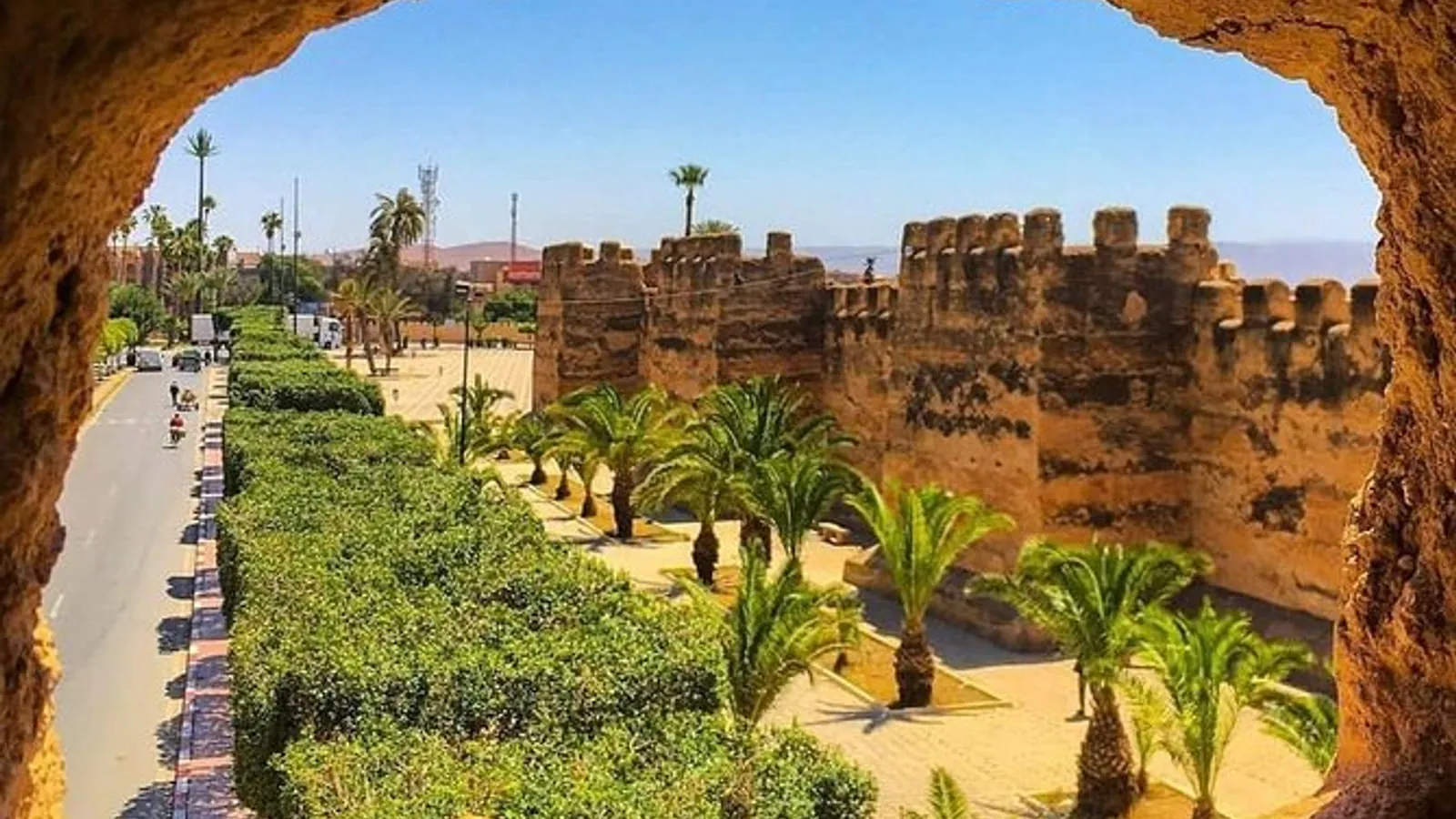
Taroudant’s medina looks like what Marrakech was before mass tourism: intact within its ochre pisé ramparts, quiet alleys still lived in by residents, a working market unchanged by the tourist trade. It’s a city that rewards the curious traveller willing to slow down.
The medina by the numbers
Taroudant is enclosed by 7.5 kilometres of ramparts dating from the 16th and 17th centuries, in remarkable condition (Taroudant history on Wikipedia). The city has around 80,000 residents. It sits 80 km east of Agadir, an hour’s drive across the Souss plain.
At 274 m altitude, the air is dry and the sky clear for most of the year — ideal for travel from March through November.
What to see in the medina
The ramparts and bastions
Taroudant’s walls are the best-preserved in Morocco. A horse-drawn carriage tour around the full circuit (around 45 minutes — negotiate the price first) gives views across olive groves, gardens, and the Anti-Atlas mountains that frame the city on three sides. If you prefer to walk, Bab El Kasbah is the natural starting point — it opens east, toward the Agadir road.
The souk
Taroudant’s central souk is still a working market, not a tourist showcase. On Tuesday and Sunday, the weekly market draws farmers from the surrounding countryside: Souss saffron, argan oil, olives, valley vegetables. The two permanent sections — the Arab souk and the Berber souk — each reward an hour of unhurried wandering.
Potters and artisans
Pottery Street, between Bab Targhount and Place Assarag, has workshops where the craft is done on traditional wheels. The tanneries are more discreet than in Fès, but no less authentic. The spice shops around Place des Alaouites sell saffron, cumin, ras el hanout at prices Marrakech markets no longer offer.
Gardens and palmeraie
The palm grove running along the northern ramparts gives shade and cool air in summer. Several riads have opened their gardens to visitors — check with the tourist office on Place Assarag.
Taroudant on foot: two routes
Morning circuit (2 hrs, ~3 km)
Start at Bab El Kasbah → cross the Arab souk → Place des Alaouites → Pottery Street → return along the inner ramparts to Place Assarag.
Best at 8 am, before the heat builds and before the tourist-facing stalls have opened.
Afternoon circuit (1.5 hrs, ~2 km)
Start at Bab Targhount → Berber souk → Sidi Ahmed ou Moussa mosque (exterior only) → back through the lower medina, with its spice shops, argan soap stalls, and local craft workshops.
When to visit Taroudant
- March – June: ideal temperatures (20–30°C), very few tourists
- July – August: intense heat (35–42°C), but the medina stays lively from early evening
- September – November: the sweet spot — fig season, saffron harvest, new olive oil
- December – February: cool nights, mild days, authentic local atmosphere
In summer, nights are warm but manageable if your accommodation has air conditioning.
Where to stay in the medina
Staying inside the ramparts puts you minutes from the souk, the gates, and the restaurants — no taxi to hail in the morning, no parking to hunt for. The alleys are quiet at night, despite what you might expect from a market town.
Our Mhaita apartment (2 bedrooms, rooftop terrace with rampart views) and Jamaâ El Kebir apartment (1 bedroom, medina centre) are both inside the walls, within 400 metres of the main commercial streets.
Riad, hotel or apartment, inside the walls or outside? To decide, see our full guide: where to stay in Taroudant.
View our Taroudant apartments →
Combining Taroudant with the coast? Our Agadir in winter guide explains why pairing the two from November to March is ideal.
Getting there
- From Agadir: shared taxi from the main bus station (~1 hr, 50–60 MAD per person)
- From Marrakech: CTM or direct bus (~3.5 hrs) — see our complete Marrakech → Taroudant guide with all prices and options
- Getting around: horse-drawn carriage (within medina), bicycle (rental available at Place Assarag), petit taxi
- By car: parking at the city gates, especially Bab Targhount and Bab El Kasbah
What to eat in Taroudant
- Lamb tagine with prunes — the local classic, best at the small restaurants around Place Assarag
- Msemen with amlou — the typical Moroccan breakfast: layered flatbread, argan butter, honey
- Amlou — a spread of almond powder, argan oil, and honey. The definitive souvenir
- Freshly squeezed orange juice — Taroudant sits at the centre of the Souss citrus-growing region
The best tables are off the tourist squares. Follow residents at lunch time: it’s the most reliable guide to quality.
Stay in Taroudant or Agadir
Four independent homes. Book direct — no platform commission.